The common rail injector is the most precise part of the entire fuel system: it meters milligrams of diesel in milliseconds, several times per cycle, at pressures of up to 2,500 bar. That precision is what gives the engine its power and reasonable fuel consumption.
That is also why a worn injector does not stop the engine overnight. It first loses performance quietly: a little more fuel burn, a little more smoke, an intermittent misfire that comes and goes. By the time the symptom is obvious, the wear is usually well advanced.
The question we hear most in the shop is simple: how often should they be tested?
The general rule
There is no single number, because it depends on the injector type, how the equipment is used and, above all, fuel quality. As a working reference:
- On-road use (trucks, buses): preventive check around 150,000 to 200,000 km, or earlier if the engine accumulates long idle hours.
- Heavy machinery and stationary equipment: check around 2,000 to 3,000 hours, especially in dusty or continuous-load applications.
- On the first fault code: if the ECM reports cylinder balance issues, injection correction out of range or unstable rail pressure, do not wait for the mileage — the affected injector is already asking for the bench.
In operations with variable fuel quality, overdue filters or contaminated tanks, those intervals shrink dramatically. Water and particulate matter are the number-one cause of internal injector wear.
Signs that it is time to test them
Do not wait for the interval if any of these symptoms appear:
- black or white smoke that was not there before, especially under acceleration;
- higher fuel consumption with no change in route or load;
- gradual loss of power, especially under load;
- intermittent misfire in one cylinder, sometimes noticeable as a new "ticking" at the valve cover;
- injection balance or cylinder cut codes on the scanner;
- excessive fuel return (back-leak), visible on the return-line fittings;
- hard cold starts or unstable idle.
What a test bench actually measures
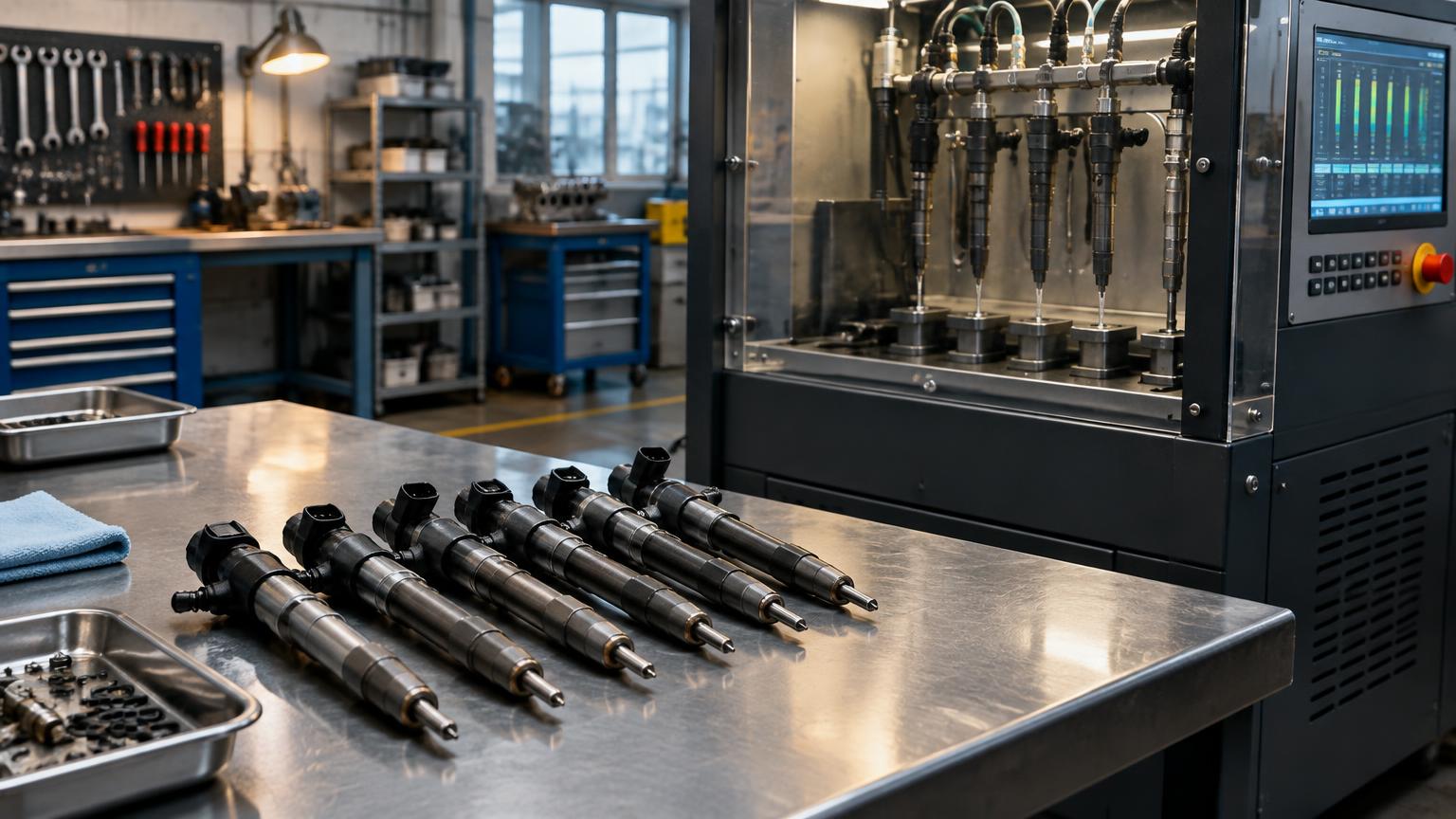
Testing a common rail injector is not "checking that it sprays". On the bench, values are measured against the manufacturer's specification:
- injection flow rate at each map point (idle, mid-range, full load);
- back-leak (return flow), which reveals internal wear of the piston and control valve;
- response time of the solenoid or piezo, critical for the engine to keep every cylinder in sync;
- comparison across all injectors on the engine, because an uneven set forces the ECM to compensate with corrections that end up stressing the whole system.
The result should be a report with measured values against specification. That document is what allows a data-based decision: repair, replace the injector, or put it back with confidence.
How to make injectors last longer
- Change fuel filters on schedule and use genuine or equivalent-quality filters.
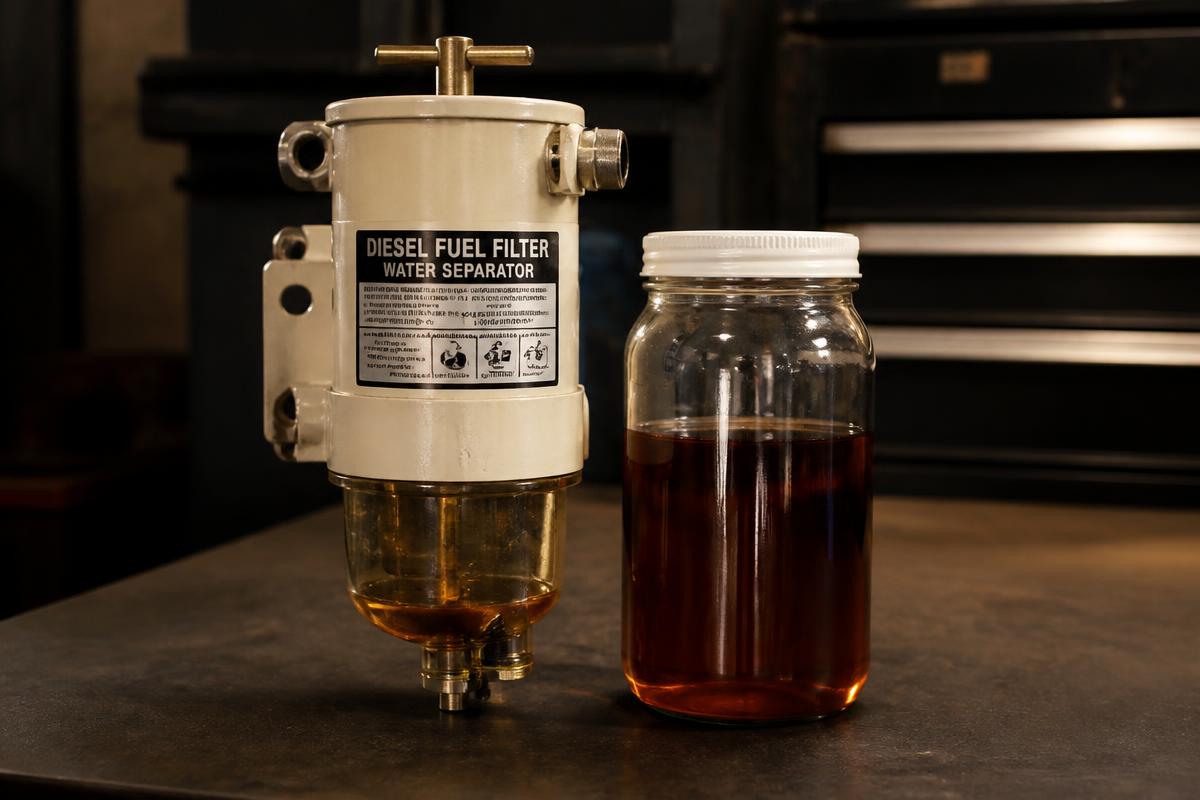
- Drain the water separator often; water is the direct enemy of the control valve.
- Avoid fuel of dubious origin or stored in open containers.
- Do not ignore balance codes: running with a cylinder over-correcting accelerates wear on the rest.
- Log every test with date, mileage or hours and measured values, injector by injector.
Traceability: knowing which injector is in which engine
A repaired or tested common rail injector has history: calibration code, bench values, date, the equipment it went into. If that history lives in a notebook or in someone's memory, it gets lost. With Diesel Works Software, every injector stays linked to the vehicle or machine, with its test and parts history available on demand.
Need to test your injectors or find spares
At Diesel Works we test common rail injectors from brands like Bosch, Denso and Delphi on a test bench, and we stock injection components for Cummins, Doosan Daewoo, Weichai, Caterpillar and more, with direct importing for hard-to-find references.
An injector tested on time is not an expense: it is the difference between an engine that performs and a breakdown that stops the job.