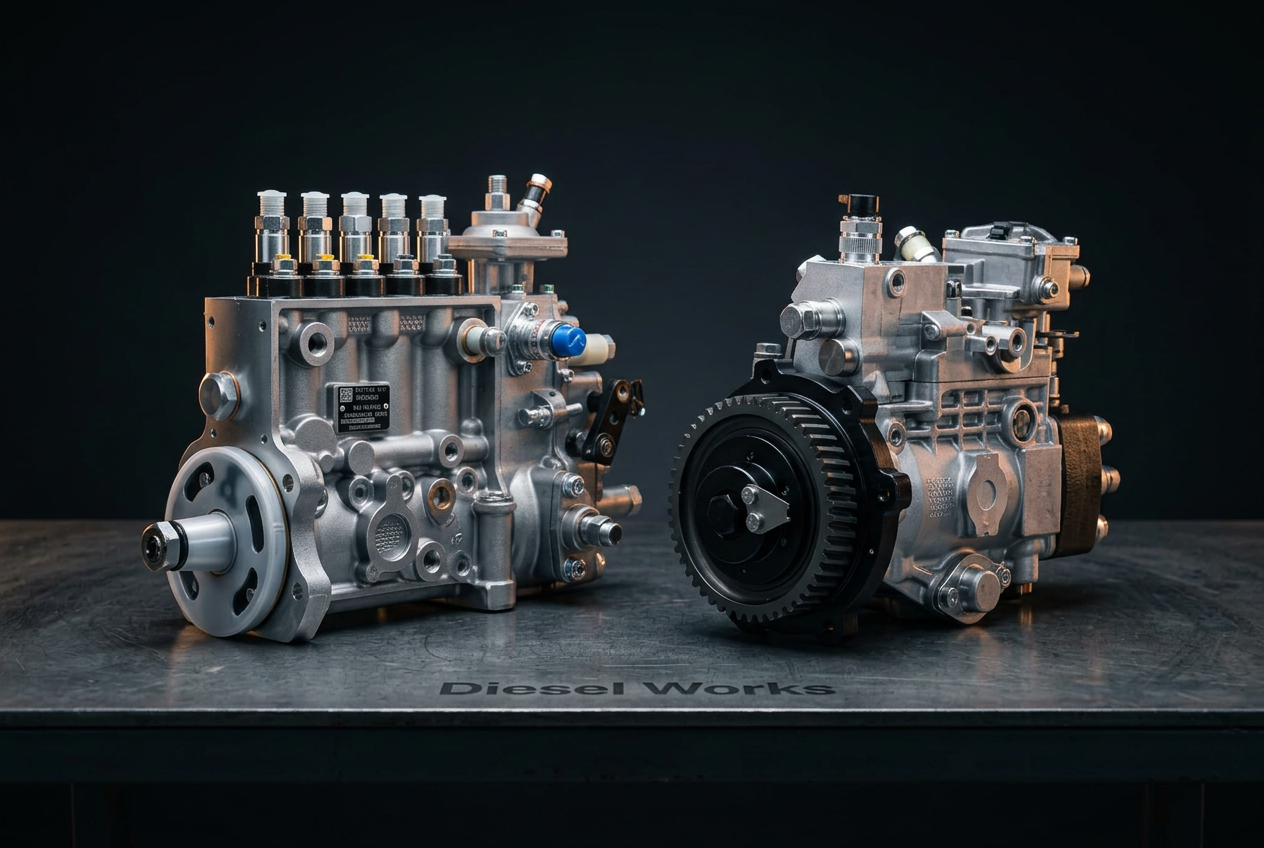
Most injection failures that reach the workshop don't start at the injector: they start in the tank. Water, particles and dirt are the silent cause behind scored pumps, stuck injectors and repairs that could have been avoided.
In Common Rail systems, working above 1,800 bar with micron tolerances, the margin for error is minimal.
Why water is so damaging
Water in diesel doesn't just fail to burn. It also:
- removes lubrication between pump parts, which are lubricated by the fuel itself;
- creates corrosion and rust in elements, valves and nozzles;
- causes cavitation, eroding internal surfaces;
- encourages microbial growth (the well-known black sludge) when fuel is stored for long periods;
- produces thermal shock at the injector tip as it flashes off.
Solid particles act like sandpaper: they score plungers, seats and needles, and that wear cannot be reversed.
How to catch it early
Signs that should alert any workshop:
- intermittent power loss with no clear pattern;
- white smoke under acceleration;
- an engine that stalls and then restarts fine;
- a fuel filter that clogs before its interval;
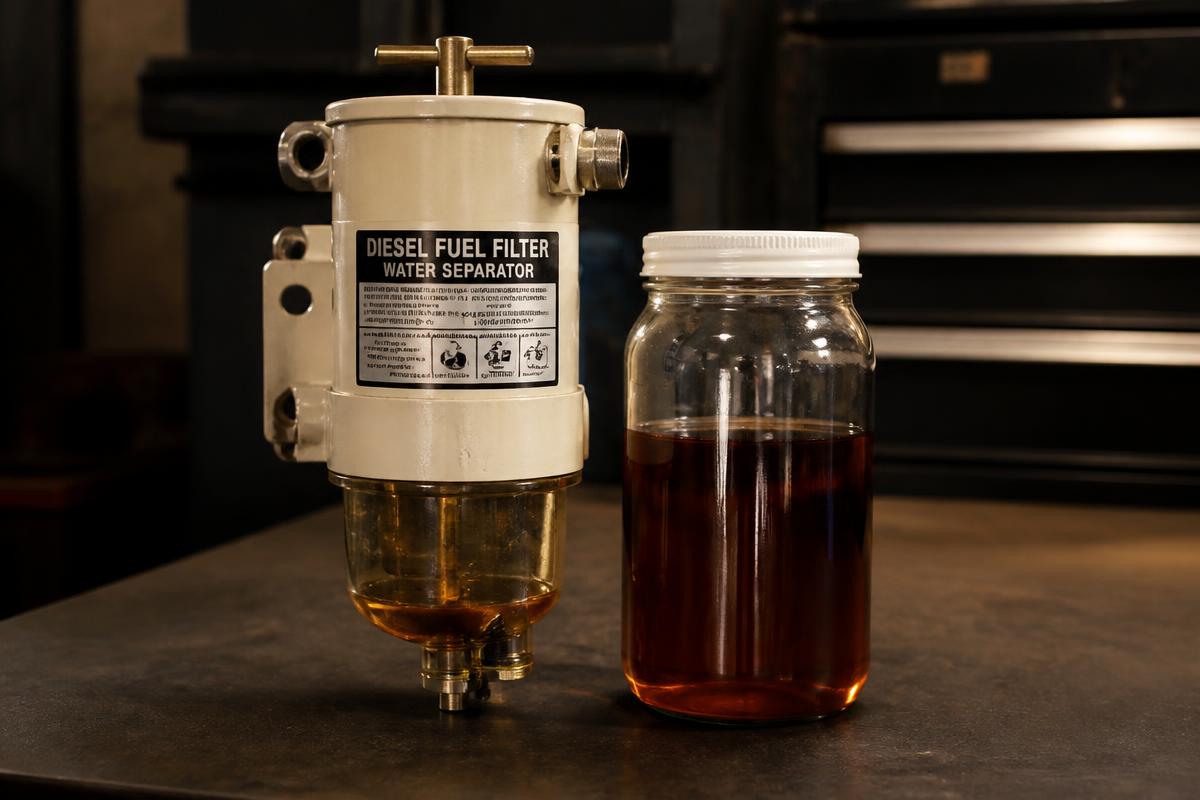
- separator bowl with cloudy liquid or two visible phases;
- rust on the tip of removed injectors.
Simple test: drain a sample from the bottom of the tank into a clear glass jar and let it settle for 15 minutes. A clear phase at the bottom is water. Dark sediment means solid contamination.
A prevention routine that actually works
- Drain the water separator according to use: daily for machinery on site, weekly for urban fleets.
- Respect primary and secondary filter intervals. A cheap filter that doesn't filter costs more than the pump.
- Don't run down to the sediment. Avoid operating with a nearly empty tank: that's where the worst material sits.
- Keep the tank full at the end of the shift to reduce condensation from temperature swings.
- Control your own storage. Open drums, dirty funnels and hoses on the floor are the most common contamination source.
- Buy fuel from reliable suppliers and record who they are: if a failure pattern appears, you'll be able to trace it.
What to do if water already entered the system
- Drain the tank and lines completely, not just the filter.
- Install new filters after purging, not before.
- Check injectors and pump on a test bench before signing the equipment off.
- Document the event: if damage repeats, the cause is the supply, not the part.
Maintenance traceability
When every drain, filter change and fuel supplier is logged per unit, guessing stops immediately. With Diesel Works Software the history for each vehicle or machine is available in seconds, with a PDF report to send to the customer.
Parts and components
At Diesel Works we handle filters, separators, injectors, pumps and components for diesel systems, with direct importing for hard-to-find references.
Looking after the fuel is the cheapest way to look after the injection system.